Few numbers shape a home purchase quite like the mortgage rate attached to it. A single percentage point can shift your monthly payment by hundreds of dollars, change which neighborhoods are realistic, and even decide whether you qualify for the loan at all. Yet most first-time buyers focus almost entirely on the sticker price of the house, not realizing that the financing cost is doing just as much heavy lifting in the final math.
Rates move for reasons that have very little to do with any one property. They respond to inflation data, Federal Reserve decisions, bond yields, and the mood of global investors. When those forces push rates higher, the same house suddenly costs more every month, even though nothing about the home itself has changed. When rates fall, buyers who were sitting on the sidelines often rush back in, which can drive prices up in a different way.
Understanding that dynamic is the difference between feeling blindsided by your mortgage quote and walking into the process with a clear strategy. The sections below break down exactly how interest rates reshape affordability, what the recent numbers actually look like, and how to position yourself no matter which direction rates head next.
What Mortgage Rates Really Represent
A mortgage rate is not just a fee. It is the price of borrowing money over a long stretch of time, often 30 years, and lenders set that price based on their own costs plus the risk they are taking on you. The base of that price usually tracks the yield on 10-year Treasury bonds, which investors treat as a safe benchmark. When Treasury yields rise, mortgage rates almost always follow.
On top of that benchmark, lenders add a spread. That spread reflects your credit score, your down payment size, the type of loan, and broader conditions in the secondary mortgage market where loans get bundled and sold. Two buyers shopping on the same day can get different quotes because of these personal factors, even though they are both watching the same headline rate on the news.
The rate you lock in determines how your monthly payment splits between interest and principal. Early in a loan, a huge share of each payment goes toward interest. That is why a seemingly small rate change at the start compounds into tens of thousands of dollars over the life of the mortgage.
How a Small Rate Change Reshapes Your Budget
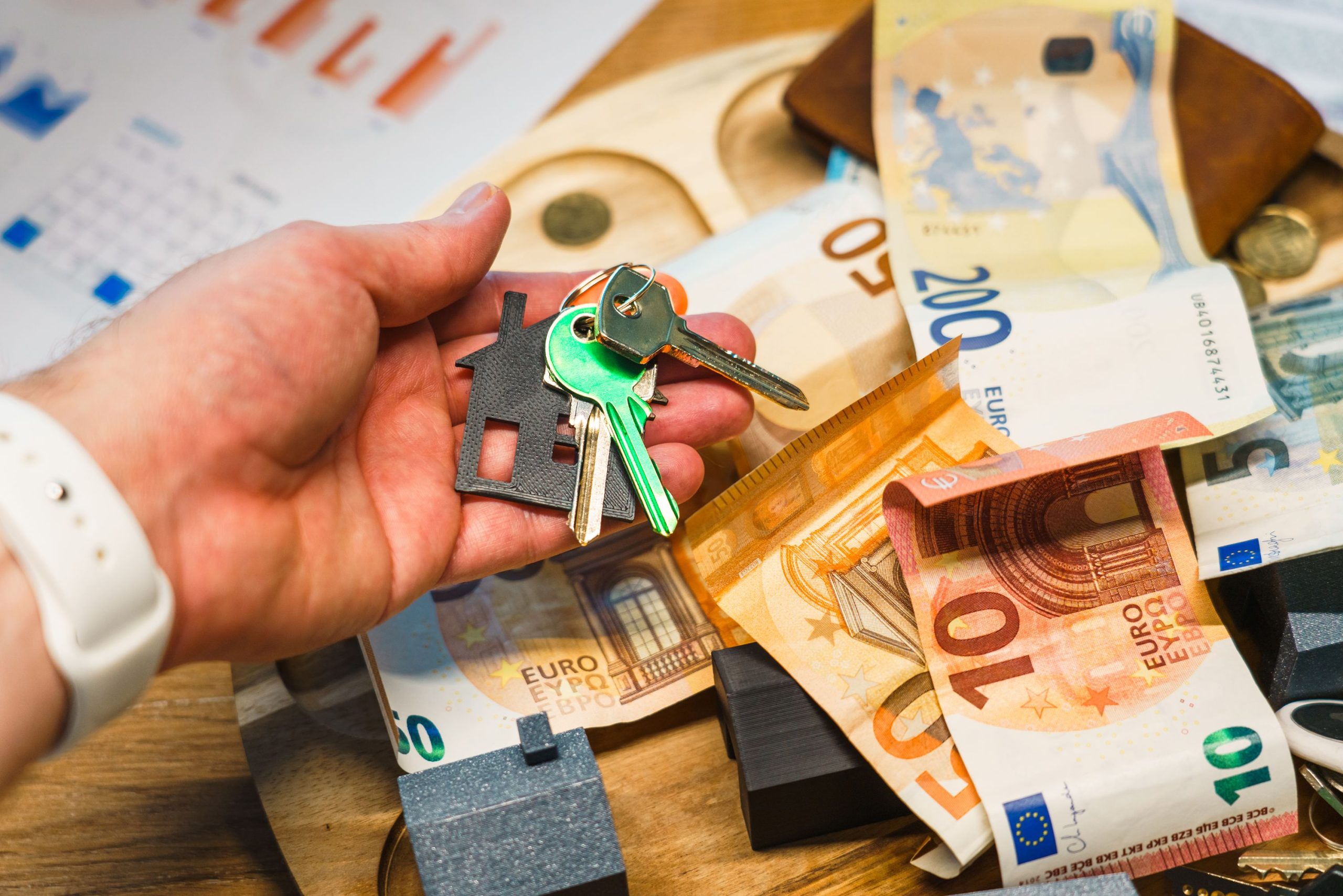
The arithmetic of a mortgage is unforgiving. Push the rate up by one point on a $400,000 loan and the monthly payment can jump by roughly $260. Over 30 years, that is close to $94,000 in extra interest. Drop the rate by the same amount and the opposite happens, which is why buyers watch every Federal Reserve meeting so closely.
According to the National Association of Home Builders, around 31.5 million households could afford a median-priced new home priced at $413,595 when the average 30-year fixed rate sat at 6.25% at the start of 2026. Shift that rate up or down by even a quarter of a point, and the pool of qualified buyers expands or shrinks by more than a million households. That is the sheer scale of what rate movement does to affordability nationwide.
Here is how a rate change translates into concrete buyer impacts:
- Monthly payment rises or falls, affecting debt-to-income ratios
- Maximum loan amount approved by lenders shifts up or down
- Private mortgage insurance thresholds can become harder to avoid
- Total interest paid over the life of the loan changes dramatically
- The price range of homes you can realistically tour narrows or widens
The Debt-to-Income Trap
Lenders use a debt-to-income ratio, usually capped around 43% to 50%, to decide how much you can borrow. When rates climb, your projected housing payment grows, which pushes that ratio higher even if your salary has not changed. Buyers who were preapproved at one rate often find themselves re-qualified for a smaller loan weeks later simply because rates moved. This is one of the most overlooked parts of what to know before buying a house, and it is why timing your preapproval and your offer carefully matters so much.
Why Purchasing Power Swings So Dramatically
Purchasing power is the total home price you can reasonably afford given your income, down payment, and the current rate. It is not a fixed number. It flexes every time rates move, which means the house you can afford this month might be out of reach in six weeks, or suddenly within reach if rates ease.
Zillow Home Loans reported that home purchasing power climbed by $30,302 year over year heading into 2026 compared with the previous year. That is a meaningful jump, and it came largely because rates had softened enough to let buyers stretch further without changing anything about their finances. The same paycheck simply bought more house.
That number also illustrates how volatile the housing picture can be. A buyer who waited out a rough stretch of high rates might have gained tens of thousands of dollars in buying capacity just by being patient. Someone who rushed in during a peak may have locked themselves into a payment that feels tight today.
- Rate drops expand the price ceiling you can afford
- Rate increases shrink that ceiling, sometimes overnight
- Down payment size can partly offset rate shifts
- Loan type (FHA, VA, conventional) changes how sensitive you are to rate moves
- Local price trends can amplify or soften the rate effect
Reading Market Shifts Before You Buy
Rate movement does not happen in a vacuum. It responds to inflation reports, jobs data, and signals from the Federal Reserve. Paying attention to these indicators, even casually, gives you a head start on timing decisions. You do not need to become an economist. You just need to recognize when the direction of rates is clearly tilting one way.
According to Bankrate, the average rate for a 30-year fixed loan reached 7.26% on November 4, 2026, climbing from where it started the year and sitting well above the 2025 average of 6.66%. That kind of move within a single calendar year is a vivid reminder that rate environments can shift fast. A buyer who assumed early-year rates would hold steady would have been caught off guard by autumn.
Interpreting Shifts in Market Trends
Tracking Market Trends means watching more than just the weekly rate headlines. It means noting how long homes sit on the market, whether price cuts are becoming common, and how competitive bidding looks in your target neighborhoods. When rates rise, inventory often grows because fewer buyers can afford to make offers. When rates fall, that inventory gets absorbed quickly and competition heats up again.
Strategies to Protect Your Buying Power
You cannot control the rate environment, but you can control how exposed you are to it. Smart buyers build in buffers, consider multiple loan structures, and stay flexible on timing. The goal is not to time the bottom perfectly. It is to avoid stretching so thin that a rate surprise derails your plans.
The National Association of Realtors flagged that in October, the average 30-year fixed-rate mortgage sat at 7.3 percent, a full percentage point higher than the same month a year earlier, based on Freddie Mac figures. That kind of year-over-year jump is exactly why protective strategies matter. Buyers who had locked in earlier or structured their loans carefully were insulated from the worst of it.
Here are strategies that help cushion rate volatility:
- Shop at least three lenders to compare quotes on the same day
- Consider a rate lock with a float-down option during volatile periods
- Explore adjustable-rate mortgages if you plan to move within 7 years
- Build a larger down payment to reduce loan size and rate sensitivity
- Improve your credit score before applying to qualify for better pricing
- Factor in buying points if you plan to stay in the home long term
Timing Your Lock Window
Once you have a signed purchase contract, most lenders let you lock a rate for 30, 45, or 60 days. Choosing the right window takes some judgment. A shorter lock usually comes with a lower rate but leaves less room for closing delays. A longer lock costs a bit more but shields you if the deal drags. In a climate where rates have been drifting upward, erring on the side of a longer lock often pays for itself. In a falling environment, a float-down clause can give you the best of both worlds, letting you capture a lower rate if the market cooperates before closing.
How Rates Interact With Home Prices
One of the most confusing parts of the buying process is that rates and home prices often move in opposite directions, but not always in the ways you might expect. When rates climb, demand usually cools, and sellers eventually soften their asking prices to attract buyers. When rates drop, pent-up demand floods the market, and prices can spike quickly as multiple offers return.
That inverse relationship means the “best” moment to buy is rarely obvious in real time. A high-rate, lower-price environment can actually produce a better long-term outcome than a low-rate, bidding-war environment, especially if you refinance later. The monthly payment in year one tells only part of the story. What matters is the price you locked in on the home itself, because you can renegotiate the rate down the road but you cannot renegotiate the purchase price after closing.
This is where thinking about the full picture of your pre-purchase preparation pays off, because the inspection, appraisal, and negotiation steps all feed into whether you got real value or just a comfortable payment. A low rate on an overpriced house is still an overpriced house.
The Refinance Safety Valve
Buyers sometimes forget that a mortgage rate is not permanent. If you buy during a high-rate stretch and rates later drop by at least three-quarters of a point, refinancing can reset your payment without changing your home or your loan balance meaningfully. There are closing costs to weigh, usually 2% to 5% of the loan amount, but the math often works in your favor within a few years. Knowing that refinancing exists as an option takes some of the pressure off the decision of when to buy.
Questions to Ask Your Lender About Rates

Loan officers deal with rate conversations every day, but buyers rarely know which questions actually unlock useful information. Going in prepared changes the quality of the quote you walk out with. The right questions also signal that you are shopping seriously, which can prompt better pricing.
- What is the exact rate, APR, and points structure you are quoting today?
- How long is the quoted rate valid, and what triggers a reprice?
- Do you offer a float-down option, and what does it cost?
- How would my rate change if my credit score moved up by 20 points?
- What loan programs would lower my rate without raising my down payment?
- Can you break down the total interest cost over the full loan term?
The answers give you ammunition for comparison shopping and reveal which lenders are competing hardest for your business. Two quotes that look identical on the surface can differ by thousands of dollars once fees, points, and lock terms are laid out side by side.
Conclusion
Interest rates are the quiet force behind every home purchase, shaping not just the monthly payment but the entire scope of what you can buy, where you can buy it, and how comfortable you will feel in the years after you close. A buyer who understands how rates connect to purchasing power, debt-to-income limits, and long-term interest costs is operating with a sharper lens than one who only looks at the listing price.
The goal is not to predict the next move in the rate environment. Nobody does that consistently, not even the professionals whose full-time job it is to try. The goal is to build enough flexibility into your plan that you can act decisively when conditions favor you and wait patiently when they do not. That means a strong credit profile, a down payment with some cushion, lender relationships already established, and a realistic sense of which neighborhoods fit your budget across a range of possible rates.
Buying a home is a long commitment, and the rate you lock in is only one moment in a much larger financial story. Keep refinancing in your back pocket, keep your options open on loan structure, and treat every quote as a negotiation rather than a verdict. Do that, and rate movement becomes something you work with rather than something that works against you.